PERCHED
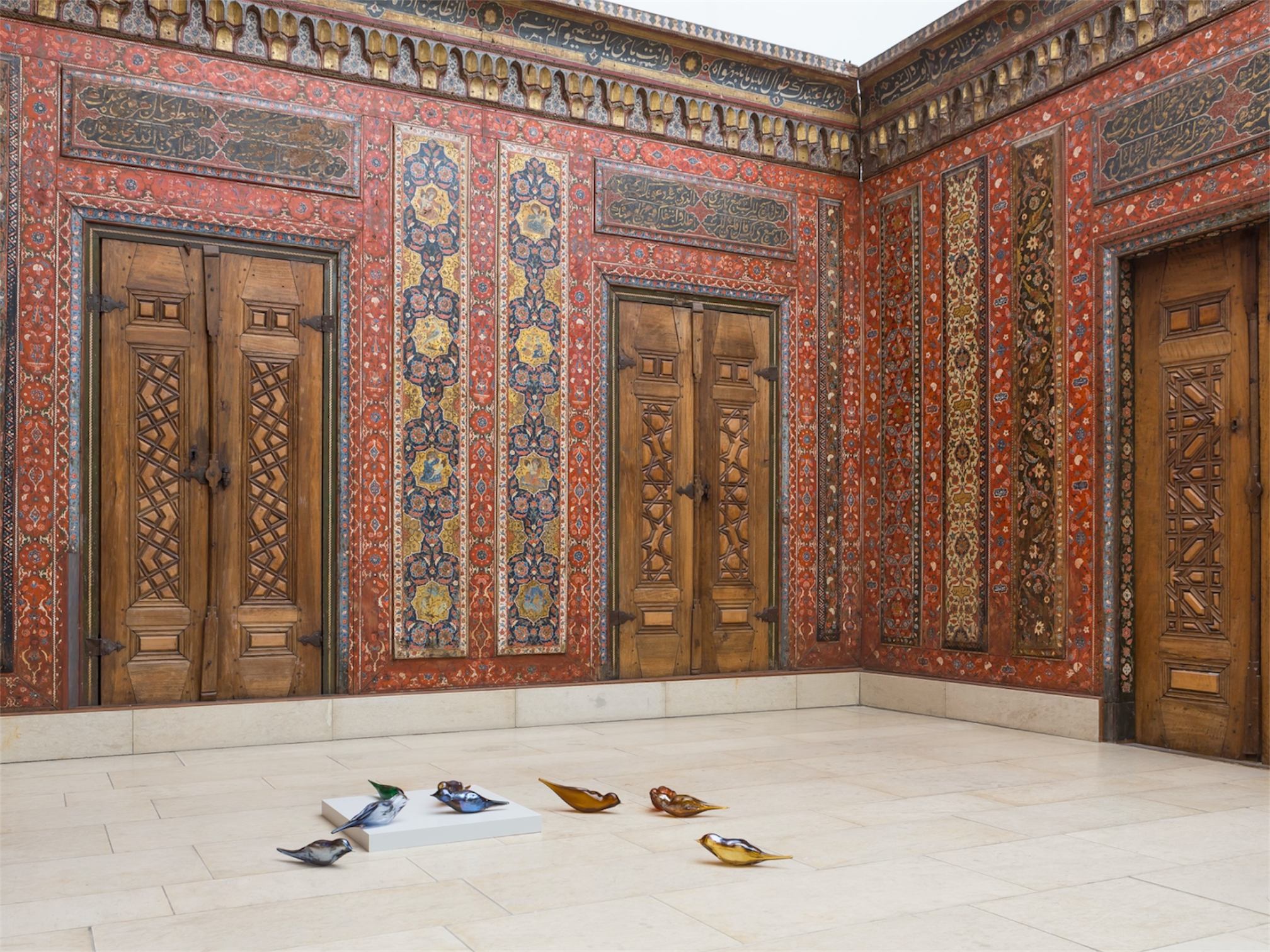
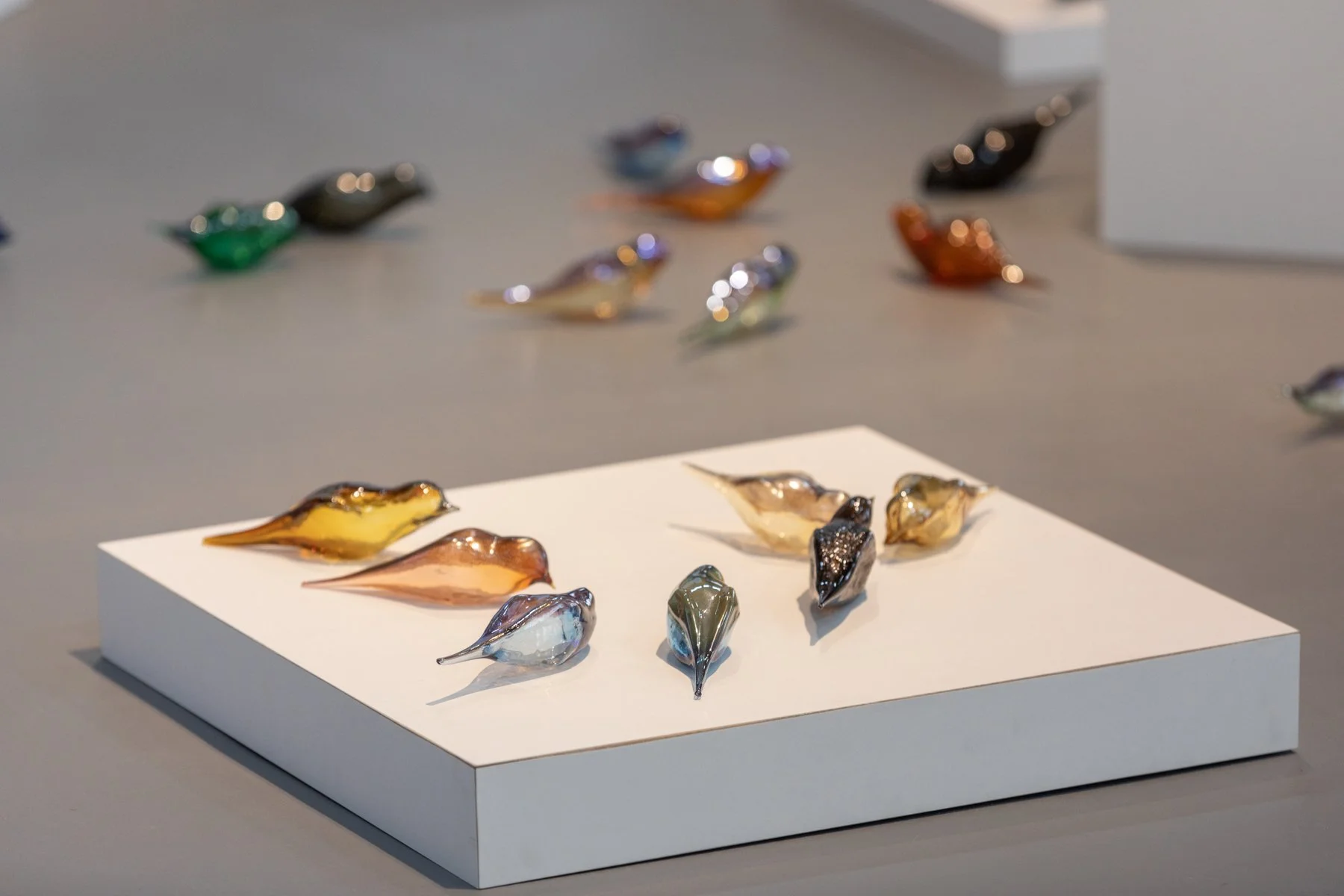
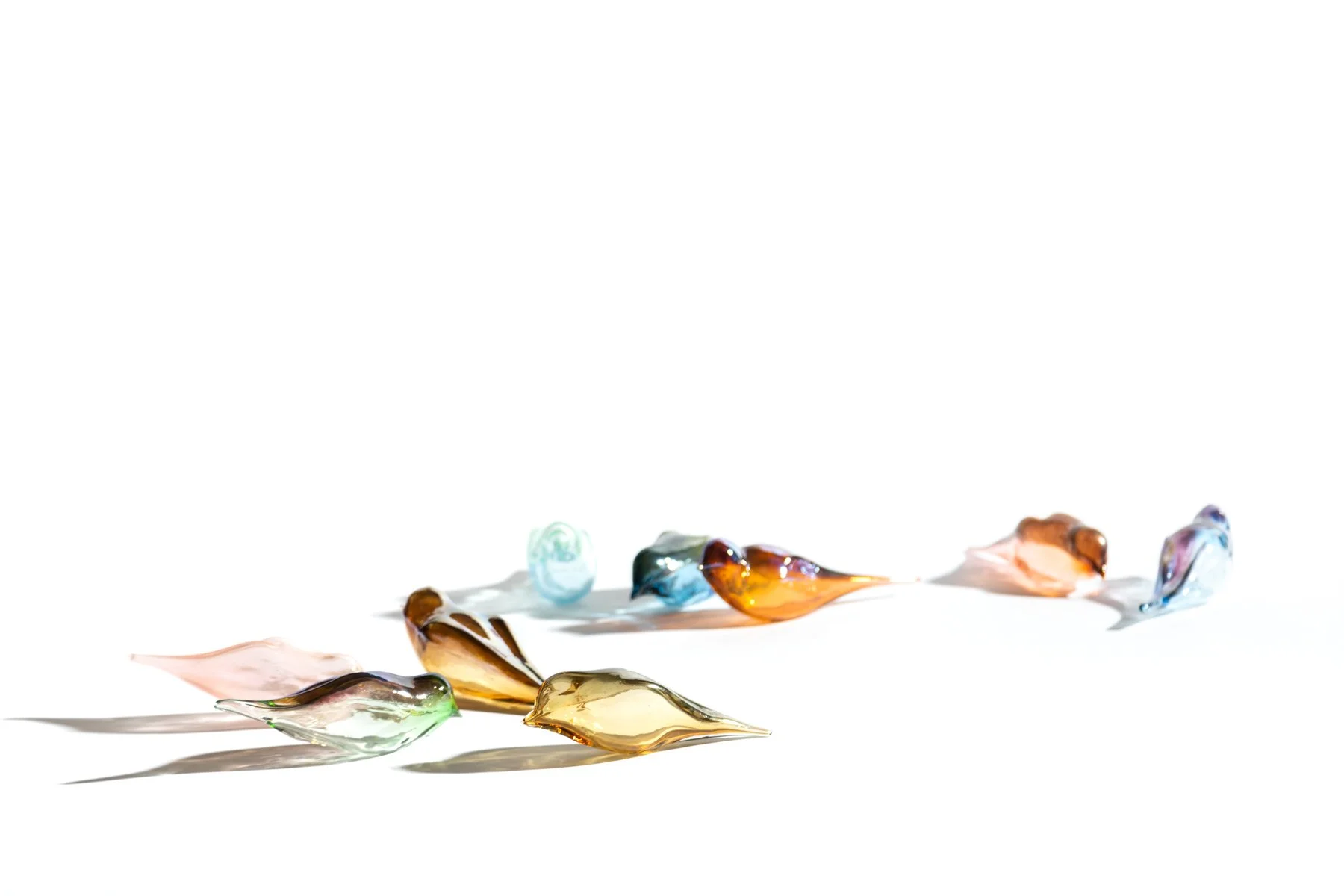
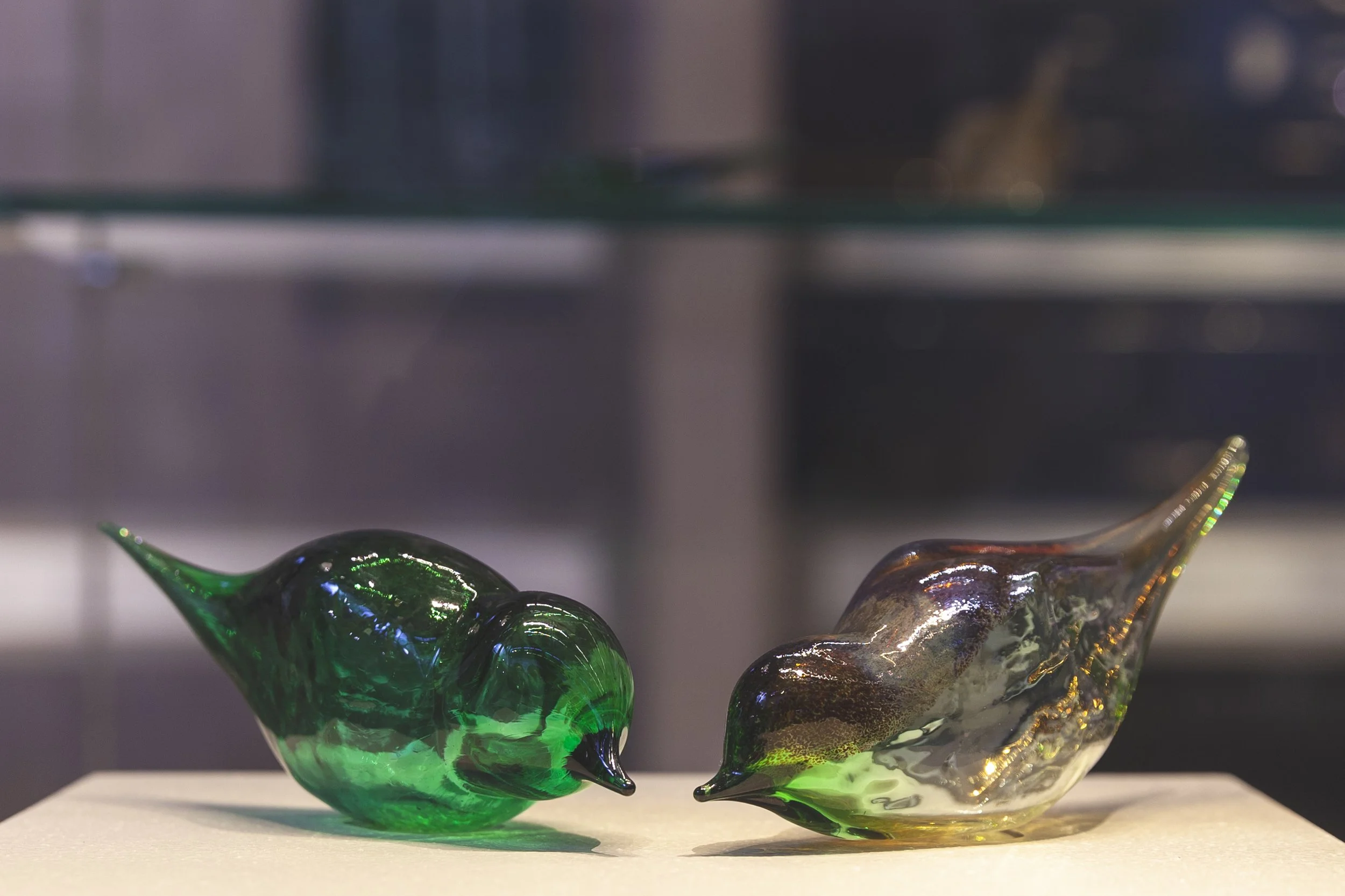
Perched began in 2017 during Felekşan Onar's residency at Berlin Glas, emerging from her reflections on displacement, migration, and the search for belonging. Inspired by Louis de Bernières' novel Birds Without Wings, which chronicles the population exchanges between Greece and Türkiye, the series also draws upon the artist's childhood memories of Söke and her encounters with Syrian refugees near her Istanbul atelier. The mould-blown glass swallows, their wings shortened and their flight arrested, embody a state of suspension—caught between departure and arrival, without the certainty of shelter or a destination.
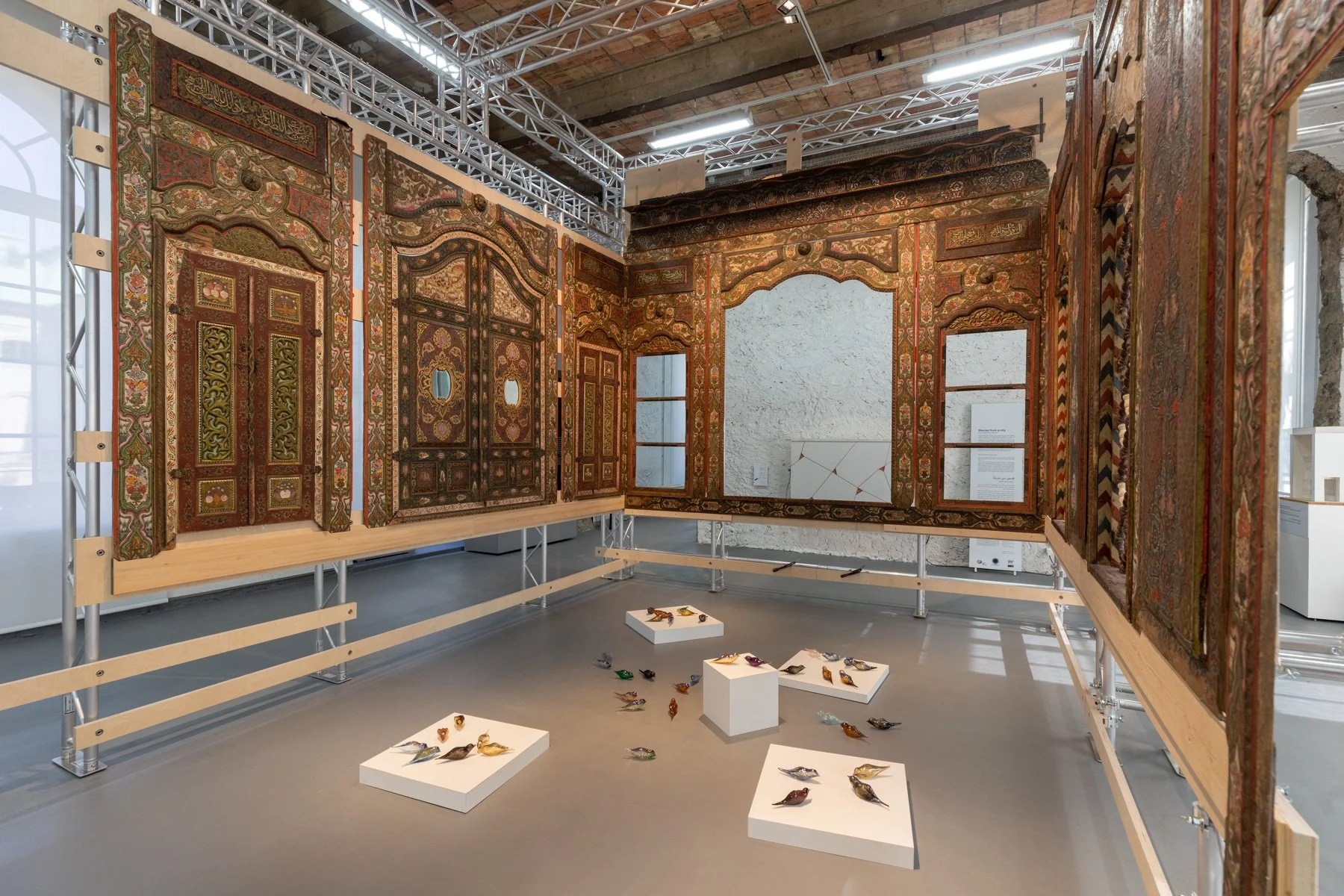
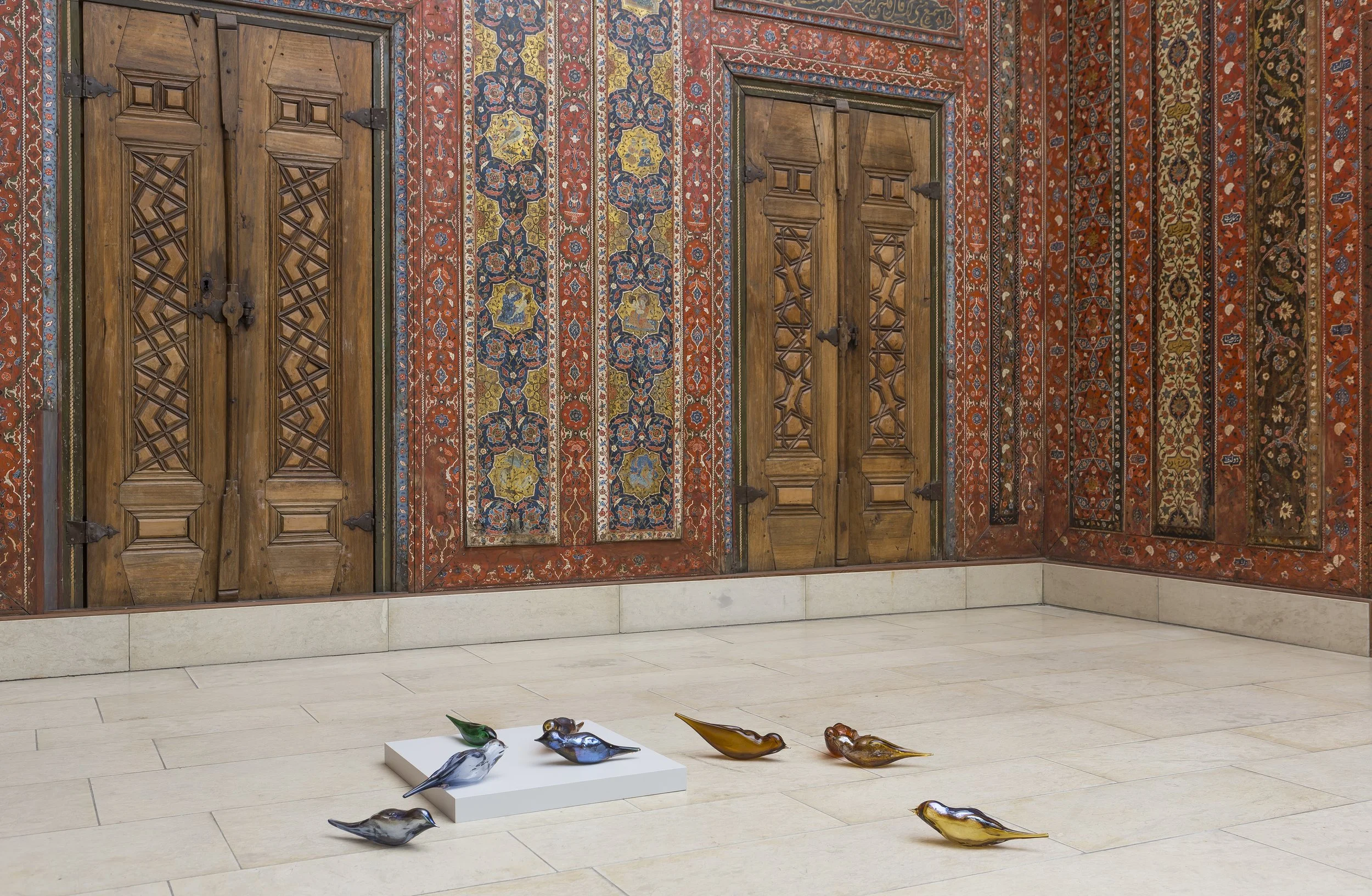
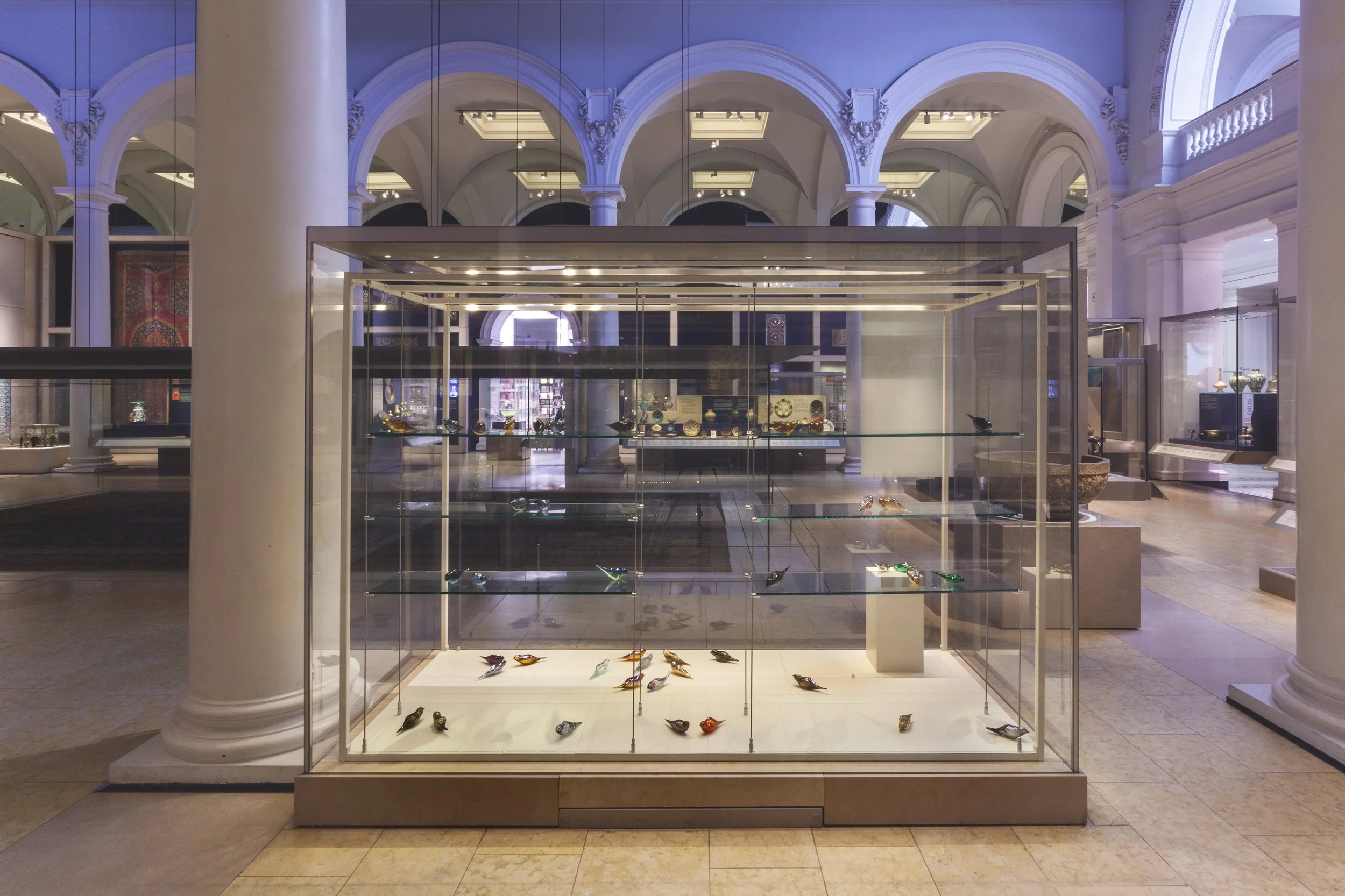
The birds began their journey in the historic Aleppo Room at the Pergamon Museum in Berlin (2018), followed by the Victoria and Albert Museum in London (2018–2019) and the Damascus Room at the Staatliche Kunstsammlungen Dresden (2020–2021). Further flocks travelled to the National Gallery of Kazakhstan and the National Art Glass Gallery in Wagga Wagga, Australia. Installed within different cultural and historical settings, the fragile birds established dialogues between contemporary displacement and the movement of people, objects, and cultural heritage. Significantly, the birds that began their journey as symbols of homelessness eventually found permanent shelter in the places to which they travelled, bringing a poignant sense of resolution to their story.
The project is documented in Perched, a monograph published by Paul Holberton Publishing in 2020. Bringing together contributions from Louis de Bernières, museum directors and curators Stefan Weber, Mariam Rosser-Owen and Stefanie Bach, Nadania Idriss, founder and director of Berlin Glas, and curator and writer Glenn Adamson, the publication explores the artistic, historical, and political dimensions of the series. Beginning with a literary inspiration and evolving through successive museum presentations, Perched ultimately returns to the written word, preserving the birds' journey as an enduring reflection on fragility, displacement, cultural memory, and the universal need for belonging.
Quisque iaculis facilisis lacinia. Mauris euismod pellentesque tellus sit amet mollis.